
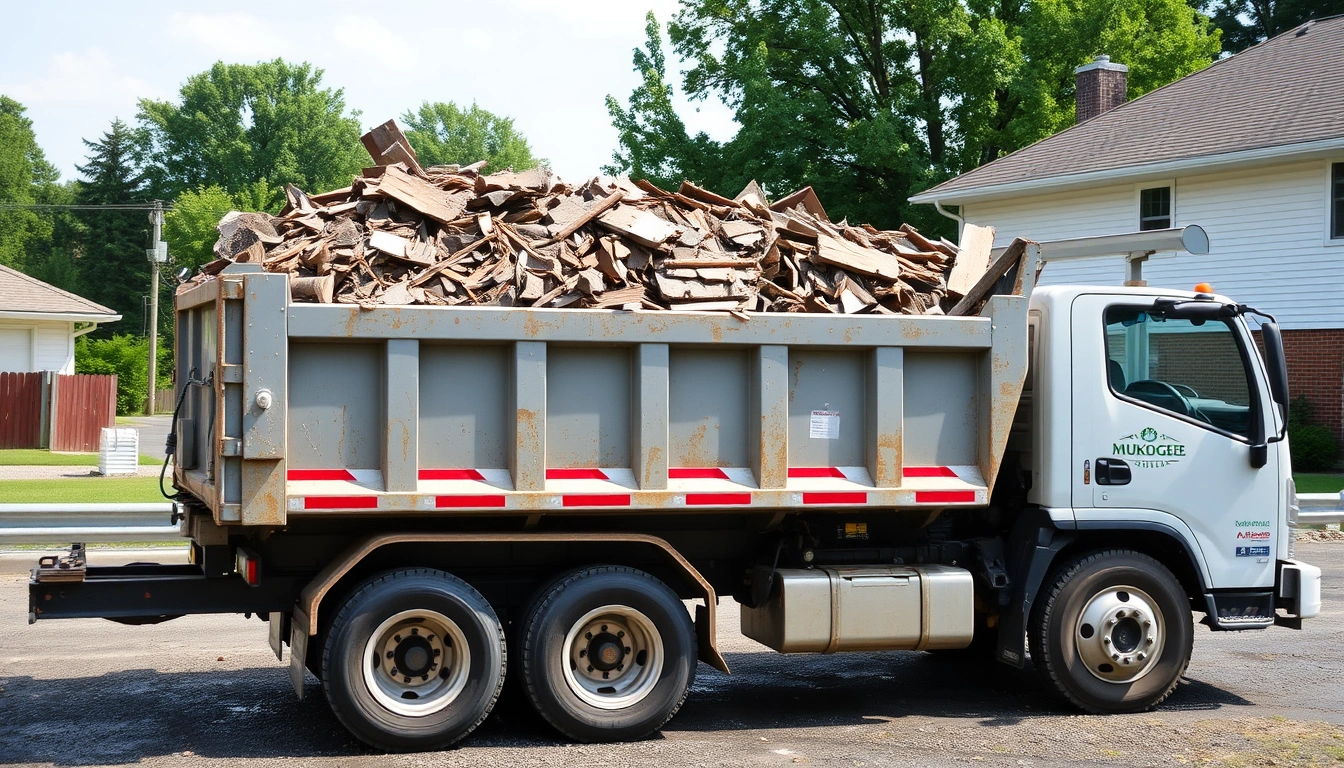
Muskogee roofing debris statistics dumpster: weight, tonnage & disposal data 2026
⏱️ 9 min read · Last updated: 2026
- Weight per square: Three-tab asphalt shingles weigh approximately 235 lbs per roofing square; architectural shingles weigh 350–400 lbs per square (Asphalt Roofing Manufacturers Association industry standard).
- Average roof size: A typical U.S. residential roof covers 17–22 roofing squares; most Muskogee single-story homes fall in the 15–20 square range based on a 1,500–2,000 sq ft footprint.
- Single-layer tear-off tonnage: A 20-square roof with one layer of three-tab shingles yields approximately 2.4 tons of debris; one layer of architectural shingles on the same roof produces 3.5–4 tons.
- U.S. annual shingle waste: American roofers generate an estimated 12.5 million tons of asphalt shingle tear-off debris each year, per Asphalt Roofing Manufacturers Association data.
- Two-layer multiplier: A two-layer tear-off on a 20-square Muskogee home produces approximately 4.7–8 tons of debris — typically requiring a 20- to 30-yard dumpster to stay within weight limits.
Three squares of old architectural asphalt shingles torn off a Muskogee rooftop weigh roughly as much as a compact car engine — about 1,200 lbs of material that has to go somewhere before the new roof goes on. Those numbers are where any honest look at Muskogee roofing debris statistics and dumpster sizing starts, because the tonnage figures determine container size, haul cost, and whether a crew finishes in a day or stretches into a second.
Most homeowners booking a roll-off container go by eye, not by weight. That works fine for miscellaneous junk hauls. Roofing debris operates differently: it is dense, it stacks fast, and on older Muskogee homes where two or three layers of asphalt shingles have accumulated over decades, the total tonnage can easily double or triple what a single-layer estimate suggests.
Oklahoma’s storm profile adds a variable that national guides miss entirely. Muskogee County sits in a corridor that sees frequent hail events, and hail damage often forces complete tear-offs on roofs that would otherwise need only targeted repairs. When a full roof comes down after a storm, every roofing square of material needs to be weighed, contained, and hauled — there is no skipping the math.
The five numbers that define a roofing debris estimate
Roofing debris weight data from the Asphalt Roofing Manufacturers Association and the U.S. Environmental Protection Agency gives us a consistent set of benchmarks that apply directly to Muskogee projects. These five figures appear in every credible tonnage estimate — and at least one of them is missing from most roofing articles.
- 235 lbs per roofing square — standard weight for three-tab asphalt shingles, the most common residential roofing material on older Oklahoma homes.
- 350–400 lbs per roofing square — typical range for architectural (dimensional) asphalt shingles, which now dominate new construction and most post-2005 re-roofing jobs.
- 15–22 squares — the range covering most Muskogee single-family homes, based on 1,500–2,200 sq ft footprints at moderate roof pitch.
- 2–5 tons per single layer — the realistic debris range for a standard residential tear-off in this market.
- 12.5 million tons annually — U.S.-wide asphalt shingle disposal tonnage per year, per ARMA, which puts local Muskogee volume into a national waste-stream context.
Weight per square: what the data actually shows
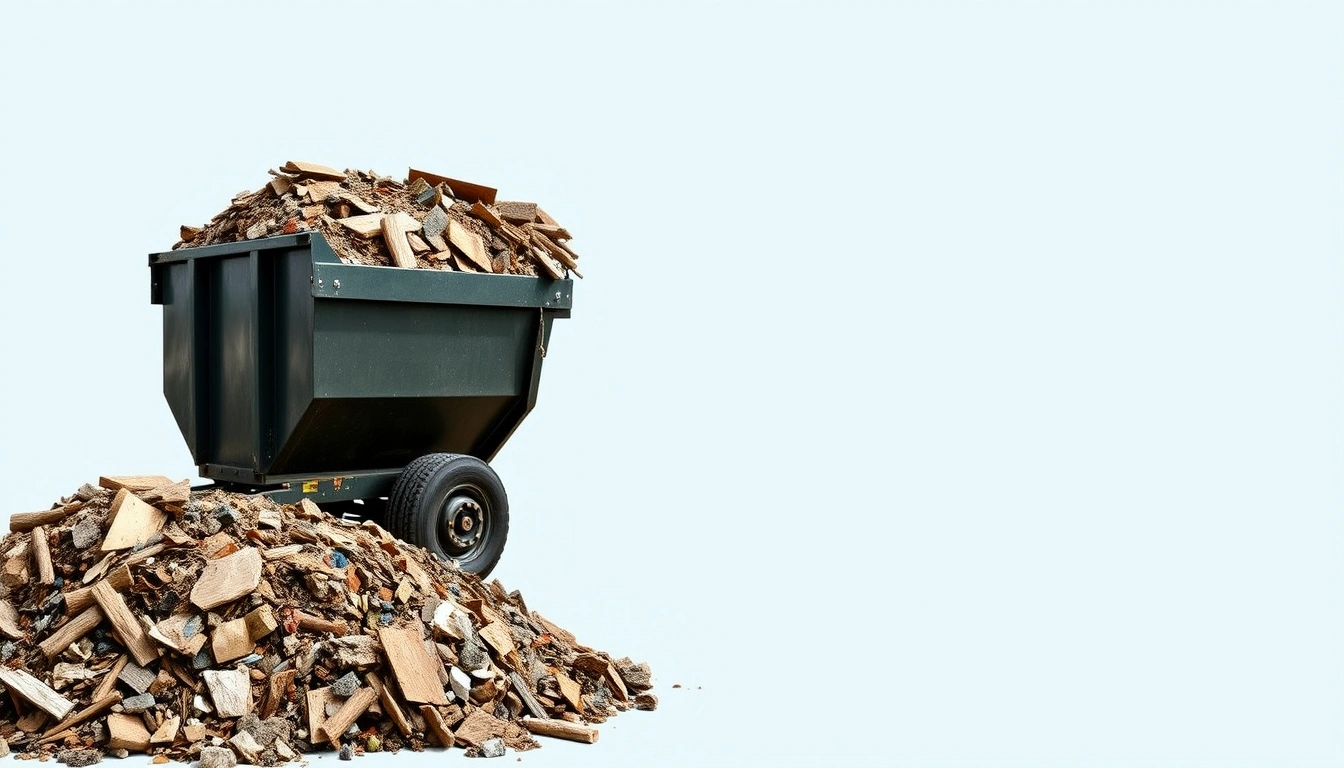
A roofing square equals exactly 100 sq ft of surface area. Weight per square (lbs) is the single most important variable in any shingle disposal statistics calculation, and the Asphalt Roofing Manufacturers Association publishes the clearest benchmarks: approximately 235 lbs for standard three-tab shingles and 350–400 lbs for architectural products.
Three-tab shingles have three cutouts along their lower edge and a single flat thickness throughout. They were the default on American homes through the 1990s and remain common on Muskogee properties built before 2000. Architectural shingles are thicker, heavier, and dimensionally textured — and they appear on most roofs installed after 2005. The weight difference between the two changes the debris estimate meaningfully: a 20-square roof with architectural shingles produces 3.5–4 tons versus roughly 2.4 tons for the same roof with three-tab material.
One figure most guides skip entirely: wet or waterlogged shingles weigh measurably more than dry ones. Industry professionals consistently estimate a 15–25% increase in debris weight when shingles have absorbed moisture from years of inadequate attic ventilation or standing water intrusion. That difference alone can push a borderline job over the capacity threshold of a 15-yard container and into 20-yard territory.
How much does an average roof weigh when torn off in Oklahoma?
A single-layer tear-off on a typical Oklahoma home produces 2 to 5 tons of asphalt shingle debris, depending on roof size and shingle type. A 20-square roof with one layer of three-tab shingles yields approximately 2.4 tons; the same roof with architectural shingles produces 3.5–4 tons. Two layers push both those figures to 4.7–8 tons, which is the range that most catches homeowners off guard.
Oklahoma adds a variable that pushes these estimates above national averages: hail frequency. The state ranks among the top 10 nationally for hail events, and Muskogee County has recorded repeated significant hail storms in recent years. Hail damage forces full tear-offs rather than targeted patch repairs, which means the total shingle count entering the dumpster per job is higher here than in lower-risk markets. A roof that might have been repaired with a few squares in Kansas often comes down completely in Muskogee.
Roof pitch is the second variable that shifts Oklahoma estimates. A steeply pitched roof on a 2,000 sq ft home can carry 28–30 squares, not the 20 that a flat-pitch calculation implies. The National Roofing Contractors Association notes that slope multipliers between 1.07 and 1.41 are standard depending on pitch — a detail that matters when calculating roof tonnage figures before a container is ordered. Ignoring pitch on a high-slope Muskogee home can produce a tonnage undercount of 25–40%.
A steeply pitched 2,000 sq ft Muskogee home can generate up to 40% more roofing squares — and proportionally more debris tonnage — than a low-pitch home of the same ground footprint.
Roofing debris weight by material type
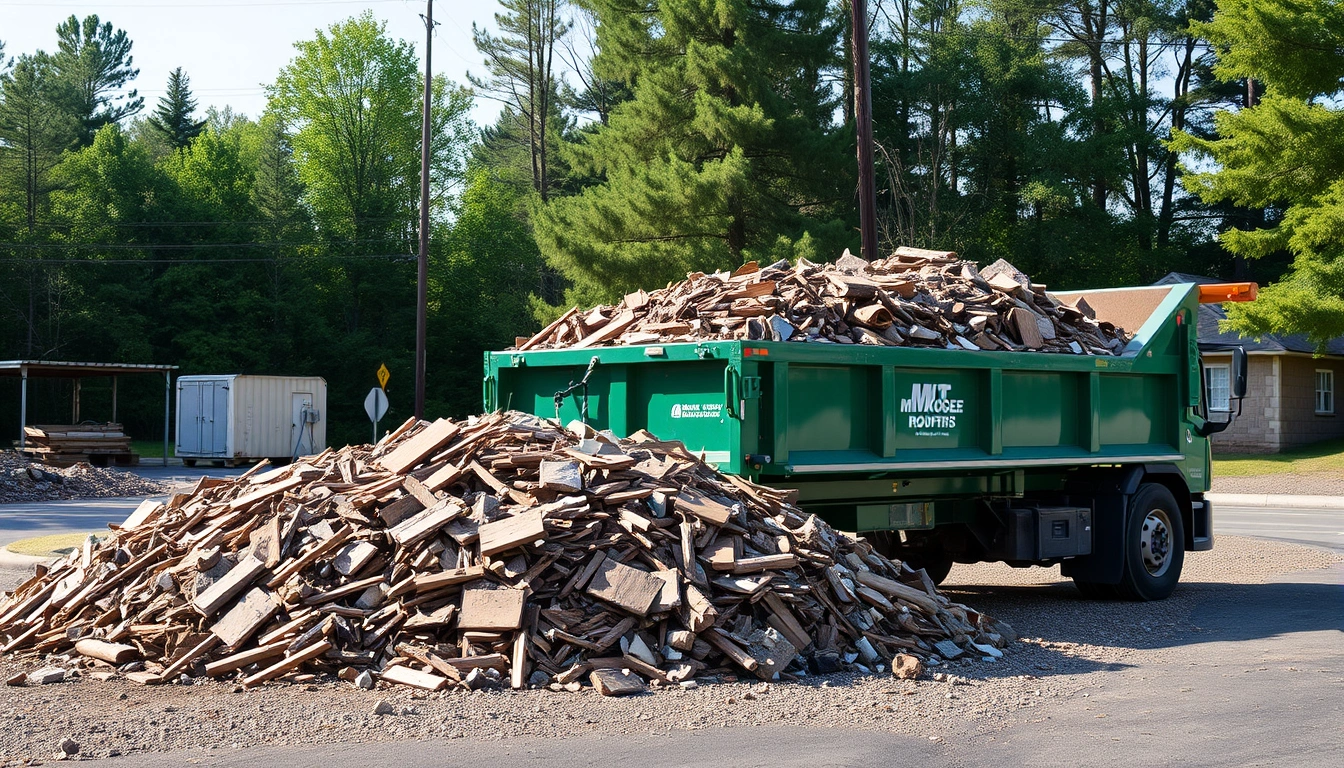
Asphalt shingles dominate the Muskogee residential market, but full shingle disposal statistics for any given property depend on what is actually on the roof. The table below consolidates weight-per-square figures most relevant to residential tear-offs in northeast Oklahoma, along with typical dumpster sizing guidance for a 20-square home.
| Roofing material | Weight per square (lbs) | 20-sq home, 1 layer (tons) | Typical dumpster |
|---|---|---|---|
| Three-tab asphalt shingles | ~235 | ~2.4 | 10–15 yard |
| Architectural asphalt shingles | 350–400 | 3.5–4.0 | 15–20 yard |
| Two-layer asphalt tear-off | 470–800 | 4.7–8.0 | 20–30 yard |
| Wood shakes | 350–450 | 3.5–4.5 | 15–20 yard |
| Concrete or clay tile | 900–1,200 | 9.0–12.0 | 30–40 yard |
Asphalt shingle weight figures reflect ARMA industry data. Wood shake and tile ranges reflect widely cited trade benchmarks used by the National Roofing Contractors Association and major roofing publications. Dumpster sizing assumes the container reaches its weight limit before its volume limit — which is almost always what happens with shingle debris. Shingles are heavy enough that standard roll-off containers hit their tonnage cap well before they look physically full.
What percentage of a dumpster does a typical roof fill?
A standard single-layer tear-off on a 20-square Muskogee home fills roughly 50–85% of a 20-yard dumpster by weight. Whether it overflows depends on one number: the container’s weight cap, which for most standard 20-yard roll-offs sits at 4–5 tons. Volume and weight are different constraints, and for shingle debris, weight almost always hits first.
A 3.5-ton single-layer architectural shingle job uses approximately 70–85% of a 20-yard container’s weight capacity. That leaves little room for underlayment, damaged plywood decking, or any secondary debris from the job. If the crew is also replacing rotted decking boards, stepping up to a 30-yard avoids mid-job overflow. Getting the sizing right from the start is straightforward — what size dumpster for roof tear off muskogee comes down to a square count, a layer count, and a shingle-type identification. That calculation takes about five minutes.
Smaller containers have a narrower margin. A 10-yard dumpster typically handles 2–3 tons — appropriate for a small single-layer job of 12–15 squares with three-tab shingles and nothing else in the bin. Anything above that, or any job with multiple shingle layers, generally requires a 20-yard minimum. Booking roofing dumpster rental muskogee ok with the correct tonnage spec upfront eliminates the costly mid-job container swap and keeps the crew working without interruption.
The layers problem: how a second roof multiplies your tonnage
A second layer of asphalt shingles on a Muskogee home doubles the effective weight per square — from approximately 235 lbs per square (one layer of three-tab) to roughly 470 lbs per square for a two-layer three-tab job. On a 20-square roof, that moves the total debris weight from 2.4 tons to 4.7 tons, crossing the capacity threshold of most standard 15-yard and light-duty 20-yard containers.
Three-layer roofs are less common but not rare on homes built in the 1960s and 1970s. Oklahoma building codes now generally cap shingle layers at two before a full tear-off is required on any re-roofing permit, but older homes with multiple owners frequently have three. A three-layer tear-off on a 20-square roof with three-tab shingles produces approximately 7 tons — more than most residential-grade dumpsters hold at their standard weight limit without triggering an overweight charge.
The timeline changes with extra layers too. Stripping two or three shingle layers by hand takes longer than a clean single-layer job, and that affects how many days the dumpster needs to stay on site. Scheduling the right rental window ahead of time prevents late fees and avoids the situation where the container gets picked up before the job is finished. Planning for roofing dumpster rental days needed muskogee should happen at the same time as sizing the container — they are connected decisions, not sequential ones.
On a 20-square Muskogee home, each additional layer of three-tab asphalt shingles adds approximately 2.4 tons of debris — a figure that should drive both container size and rental duration decisions from the first phone call.
Muskogee County disposal volume: the regional picture
No publicly available annual tonnage report exists specifically for asphalt shingle disposal at the Muskogee County landfill, but local disposal volume can be estimated from housing stock and national averages. Muskogee has approximately 15,000–16,000 housing units according to U.S. Census Bureau data. Applying a national reroofing rate of 3–5% annually — the figure used by roofing industry analysts — produces an estimate of 450–800 residential roofing projects in Muskogee per year.
At a midpoint debris average of 2.5 tons per job (weighted to reflect the mix of single-layer and two-layer tear-offs on a varied housing stock), that works out to an estimated 1,100–2,000 tons of asphalt shingle debris generated annually in Muskogee. This is a reasoned calculation based on national benchmarks — it is not a figure sourced from Muskogee County landfill records, and the county does not publish this data in a publicly accessible form. Oklahoma’s above-average hail frequency likely pushes actual volume toward the upper end of that range during active storm seasons.
For national context: the U.S. EPA identifies construction and demolition debris as one of the largest waste streams by volume in the country, generating several hundred million tons annually. Asphalt shingles alone account for a meaningful fraction of that total. For homeowners and contractors in Muskogee, the practical takeaway is that the Muskogee County landfill receives this material routinely — and that using a local provider that handles disposal directly simplifies the compliance picture considerably. Standard dumpster rental Muskogee OK services typically include transport to the landfill and disposal fees in their quoted rate, which removes one variable from the job budget.
How to cite this page: Reference the weight-per-square figures to ARMA industry data and the NRCA for slope multipliers. The Muskogee annual tonnage range (1,100–2,000 tons) is a calculated estimate based on Census housing stock and standard industry reroofing rates — label it as such if citing in a report or proposal.
- Three-tab asphalt shingles weigh approximately 235 lbs per roofing square; architectural shingles weigh 350–400 lbs per square — a difference that changes the dumpster size calculation on every job.
- A typical 20-square Muskogee home with one shingle layer produces 2.4 to 4 tons of debris; two layers doubles that range to 4.7–8 tons.
- Oklahoma’s hail frequency drives more complete tear-offs than the national average, raising per-job debris volume above what generic roofing calculators suggest.
- Waterlogged shingles and steep roof pitches are the two most commonly overlooked factors that cause tonnage estimates to fall short — check both before ordering a container.
Common questions about muskogee roofing debris statistics dumpster
What is the average weight of a residential roof tear-off in the U.S.?
A single-layer residential tear-off typically yields 2 to 5 tons of asphalt shingle debris, depending on roof size and shingle type. Three-tab shingles weigh approximately 235 lbs per roofing square; architectural shingles weigh 350–400 lbs per square. A 20-square home with one layer of three-tab shingles produces roughly 2.4 tons of total debris.
How do I estimate total roofing debris weight step by step?
Divide total roof square footage by 100 to get the number of roofing squares. Multiply squares by the shingle weight per square — 235 lbs for three-tab, or 350–400 lbs for architectural shingles. If two layers exist, multiply the result by two. Divide total pounds by 2,000 to convert to tons. That tonnage figure determines the minimum dumpster weight capacity needed.
Do asphalt shingles weigh more than wood shakes or tile roofing?
Asphalt shingles are lighter than concrete or clay tile, which runs 900–1,200 lbs per roofing square, and comparable to wood shakes at 350–450 lbs per square. Standard three-tab asphalt at approximately 235 lbs per square is the lightest common residential roofing material, which is why most single-layer asphalt jobs fit a 10- to 15-yard dumpster while tile tear-offs often require 30 to 40 yards.
Why do roofs weigh more than expected, and how should I plan for it?
The most common reasons: undiscovered second or third shingle layers, waterlogged shingles that weigh 15–25% more than dry material, and steep roof pitches that add roofing squares beyond what the footprint suggests. On Muskogee homes built before 1990, two layers are common. Verify layer count and roof pitch before finalizing any dumpster order — both factors can shift tonnage by 50% or more.
How much roofing debris is generated in Muskogee each year in 2026?
Based on Muskogee’s housing stock of approximately 15,000–16,000 units and a national reroofing rate of 3–5% annually, Muskogee likely generates an estimated 1,100–2,000 tons of asphalt shingle debris per year. This is a calculated estimate — no published annual figure exists from the Muskogee County landfill. Oklahoma’s above-average hail frequency likely pushes that number toward the higher end in active storm years.
What size dumpster do I need for a 1,500 sq ft roof tear-off in Muskogee?
A 1,500 sq ft roof equals 15 roofing squares. One layer of three-tab shingles at 235 lbs per square produces roughly 3,525 lbs — about 1.75 tons. A 10-yard d
See also: roofing dumpster rental muskogee ok
See also: what size dumpster for roof tear off muskogee
See also: roofing dumpster rental days needed muskogee
Related: roofing dumpster weight limit overage muskogee
Related: multiple layer roof tear off dumpster muskogee
Related: roofing contractor dumpster placement driveway muskogee

Leave a Reply