
Roofing dumpster weight limit overage in Muskogee: 2026 fees, weight tickets, and how to avoid the bill
⏱️ 8 min read · Last updated: 2026
- A 20-yard dumpster in Muskogee typically includes a 2-ton weight limit; overages are commonly billed at $75–$100 per ton over that limit.
- Standard 3-tab asphalt shingles weigh 230–250 lbs per square (per 100 sq ft of roof area); architectural shingles weigh 350–430 lbs per square.
- A single-layer tear-off on a 2,000 sq ft home typically generates 2.5–3.5 tons of roofing debris; a two-layer tear-off commonly doubles that to 5–7 tons.
- The Muskogee County landfill weight ticket is the official document your rental company uses to calculate overage fees — it records gross, tare, and net debris weight.
- Upsizing from a 20-yard to a 30-yard dumpster typically costs $50–$100 more upfront but can prevent $150–$400 in overage fees on a standard re-roof.
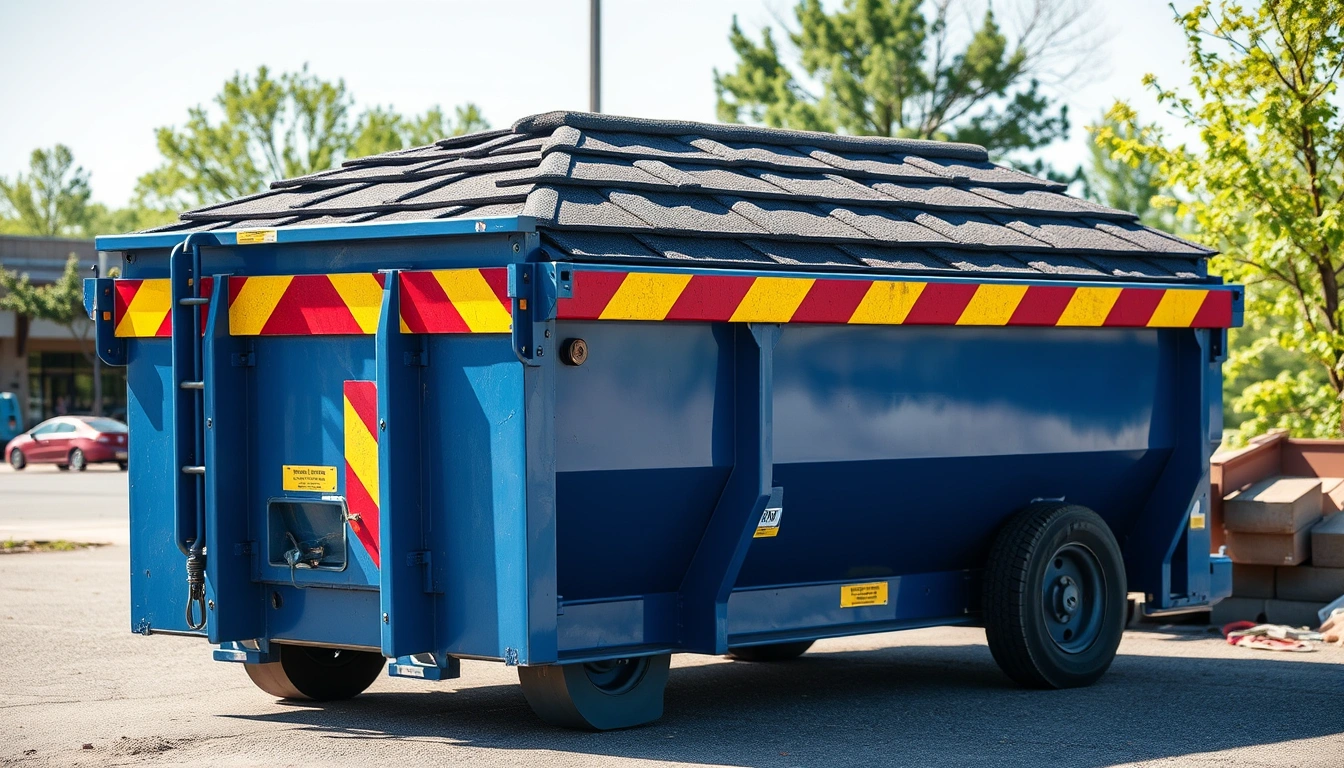
The extra charge shows up on the final invoice three days after pickup — $225 for exceeding the weight limit, not a billing error, just the math on two layers of asphalt shingles nobody weighed in advance. Roofing dumpster weight limit overage in Muskogee works exactly this way: your rental company drives the loaded container to the Muskogee County landfill, crosses the certified truck scale, and the weight ticket that prints out determines what you actually owe beyond your quoted price.
Asphalt shingles are brutally dense. A standard bundle weighs 60–80 lbs, and three bundles cover one roofing square — 100 sq ft of actual roof surface. On a 2,000 sq ft home with a moderate pitch, you’re dealing with roughly 22–24 actual roofing squares. Single-layer 3-tab tear-off: about 2.5 tons. Architectural shingles on that same roof: close to 4 tons. Two layers of either? The numbers double, and the typical 20-yard dumpster’s 2-ton limit doesn’t stand a chance.
Homeowners who avoid overage bills run the tonnage estimate before they call the rental company, not after. That calculation takes about five minutes and requires two numbers: roof square footage and layer count. The rest is straightforward arithmetic — and the decision tree below walks through it exactly.
How roofing debris tonnage adds up — and why the math catches most homeowners off guard
Asphalt shingles are the densest common construction material most homeowners ever throw in a dumpster — heavier per cubic yard than wood framing, drywall, or most concrete rubble. The number that actually drives your bill is per-square weight: how many pounds of debris each 100-square-foot section of roof produces.
Standard 3-tab asphalt shingles run 230–250 lbs per roofing square. Architectural (dimensional) shingles — the layered style found on most Oklahoma homes built after the mid-1990s — run 350–430 lbs per square, according to product specification data published by major manufacturers. On a roof with 22 squares of architectural shingles, that’s 7,700–9,460 lbs in a single layer alone. That’s 3.85–4.73 tons before you account for felt paper, ridge caps, flashing, or any decking.
The EPA’s construction and demolition debris data confirms that roofing materials represent one of the heaviest per-volume C&D waste streams, making weight — not volume — the binding constraint on most roofing dumpster rentals. A 30-yard container looks enormous until you pack it with dense architectural shingles.
Two-layer tear-offs are where the math becomes genuinely punishing. Oklahoma’s residential building code permitted two shingle layers through the 2009 International Residential Code adoption cycle, and a large share of Muskogee-area homes have exactly that. Two layers of architectural shingles on a 2,000-square-foot home commonly generates 7–9 tons of roofing debris — well beyond what any standard 20-yard or even 30-yard dumpster includes in its base weight limit.
Quick check: Multiply your home’s footprint by 1.3 (low-slope roof, 4/12 pitch or less) or 1.5 (steep pitch, 9/12 or higher) to get approximate roof surface area in sq ft. Divide by 100 to get roofing squares. Multiply by 240 lbs (3-tab) or 400 lbs (architectural) per square, then multiply by layer count, and divide by 2,000 to get estimated tons. If that number exceeds your dumpster’s included weight limit, you need a larger bin.
How much are overage fees if my roofing dumpster is over the weight limit in Muskogee?
Overage fees on a roofing dumpster in Muskogee commonly run $75–$100 per ton over the included weight limit as of 2026. That means one ton over costs $75–$100 on your final invoice; two tons over adds $150–$200. The exact rate varies by provider, but most Muskogee-area rental companies price within this range because their per-ton overage fee is anchored to the Muskogee County landfill tipping fee, plus margin.
Here is how the math plays out on a real job. A 20-yard dumpster with a 2-ton weight limit, loaded with a single-layer architectural shingle tear-off on a 1,800-square-foot home, commonly weighs in at 3.2–3.6 tons at the landfill scale. That’s 1.2–1.6 tons over the limit — roughly $90–$160 in overage fees at standard Muskogee-area rates. Not catastrophic, but also not in the original quote.
One detail that changes the math: some providers bill overage fees in full-ton increments (1.4 tons over = billed as 1 ton), while others bill in fractional increments (1.4 tons over = billed at 1.4 tons). On a job that runs 1.5 tons over the weight limit, the difference between those two billing methods is $37–$50. When you book a roofing dumpster rental muskogee ok, confirm which method your company uses before the bin is delivered.
Quick check: If your debris estimate lands within 0.5 tons of the included weight limit, treat it as already over and upsize. There is no buffer in that margin for the felt paper, roofing nails, and ridge cap material that go in alongside the shingles — and those materials add up.
What a landfill weight ticket actually shows — and how your bill gets calculated
A weight ticket is the printed receipt generated when a truck crosses the certified scale at the Muskogee County landfill. It records three numbers: gross weight (truck plus loaded dumpster), tare weight (the empty truck, either measured on the return trip or from a calibration record), and net weight — the debris-only figure calculated by subtracting tare from gross. That net weight is what your rental company uses to calculate any overage fee per ton charged to you.
Most homeowners never see this document. The rental company hauls the bin, gets weighed, pays the tipping fee, and passes any overage through to the final invoice with a line like “excess weight: 1.4 tons @ $85/ton = $119.” That charge is legitimate when the weight ticket supports it — and certified scales at licensed landfills are regularly calibrated, so the number is reliable.
You can also ask your rental company to show overage charges as a separate line item cross-referenced against the weight ticket number. This makes verification straightforward: net weight on the ticket minus your included tonnage, multiplied by the stated overage fee per ton, should equal the additional charge on your invoice. For typical project weight ranges in this area, the muskogee roofing debris data breaks down tonnage by home size and shingle type — useful for setting expectations before the bin arrives.
Quick check: When your final invoice arrives, locate the weight ticket reference number on any overage line item. If the charge appears without one, that’s the moment to request it — before the bill is paid.
The decision tree: picking the right dumpster before the shingles hit the bin
The right dumpster size for a roofing tear-off comes down to four variables: roof square footage, number of shingle layers, shingle type, and whether decking or other non-shingle debris is included. Work through them in order before you call your rental company.
- Calculate your roof’s actual surface area. Multiply your home’s footprint (square footage) by a pitch factor: 1.3 for low slope (4/12 or less), 1.4 for moderate pitch (5/12 to 8/12), or 1.5 for steep pitch (9/12 and above). Divide by 100 to get roofing squares.
- Identify the shingle type. 3-tab shingles are thin and uniformly flat. Architectural shingles have visible dimensional layering with heavier exposed tabs. If in doubt, lift a shingle edge at the eave — architectural shingles have noticeably more mass.
- Count the layers. Check the exposed edge at the drip edge or rake. Multiple visible shingle layers mean a multi-layer tear-off. Each additional layer adds the same weight as the first.
- Estimate total debris weight. Roofing squares × lbs per square (240 for 3-tab, 400 for architectural) × number of layers ÷ 2,000 = estimated tons of roofing debris.
- Add a 10–15% buffer. Felt paper, roofing nails, ridge cap shingles, and flashing all go in the same dumpster. They add weight that most pre-job estimates miss entirely.
- Compare to the dumpster’s weight limit and decide. If estimated tons plus buffer exceeds the included weight limit, upsize. If you are within 0.3 tons of the limit after adding the buffer, treat it as already over and upsize. To confirm the right container dimensions for your specific job, the guide on what size dumpster for roof tear off muskogee projects covers each home size with tonnage calculations already done.
| Project scenario | Est. debris weight | Recommended container | Overage risk |
|---|---|---|---|
| 1,000 sq ft home, 1 layer, 3-tab | 1.2–1.5 tons | 10-yard (2-ton limit) | Low |
| 1,500 sq ft home, 1 layer, architectural | 2.6–3.3 tons | 20-yard (3-ton limit) or 30-yard | Medium on 20-yard |
| 2,000 sq ft home, 1 layer, architectural | 3.5–4.5 tons | 30-yard (4-ton limit) | Low |
| 2,000 sq ft home, 2 layers, 3-tab | 5–7 tons | 30-yard or schedule two hauls | High without planning |
| 2,500 sq ft home, 2 layers, architectural | 8–11 tons | Multiple containers | Certain without multiple bins |
Upsizing from a 20-yard to a 30-yard dumpster in Muskogee costs $50–$100 more upfront. Avoiding a 2-ton overage fee saves $150–$200. The math almost always favors the larger container on any job with architectural shingles or multiple layers.
Quick check: Run this one-minute estimate before you call: footprint × pitch factor ÷ 100 = squares. Squares × lbs/square × layers ÷ 2,000 = estimated tons. Add 10%. If that number exceeds the included weight limit on the bin you’re considering, you already have your answer.
Why did my dumpster rental cost more than quoted after the roofing job?
The most common reason a roofing dumpster rental costs more than quoted is a weight-based overage fee per ton that wasn’t built into the original estimate. The quoted price covers delivery, pickup, the container, and the included tonnage — but when the debris weight clears the Muskogee County landfill scale above your rental’s weight limit, that excess is billed after the weight ticket is processed, sometimes days later.
The second most common cause is a low initial weight estimate. This happens when homeowners state their home’s square footage without accounting for roof pitch (which increases actual surface area by 30–50%) or for layer count. A 2,000 sq ft house with a 6/12 pitch has about 14% more roofing surface than the footprint alone implies. That gap translates directly into pounds on the weight ticket — and dollars on the final invoice.
A third cause is mixed debris. Gutters, fascia boards, plywood decking sections, and felt paper all go in the same dumpster on most DIY tear-offs — and all of that weight shows up as roofing debris tonnage on the Muskogee County landfill weight ticket. Some rental agreements specify that base-rate pricing applies to asphalt shingles only; mixed construction debris may carry a higher tipping rate that flows through to your final invoice.
If the project timeline is also stretching longer than planned, note that extended rental days can appear on the same invoice as the weight overage, making the total look larger and harder to parse. Understanding how roofing dumpster rental days needed muskogee affect your overall cost helps you isolate exactly which line item is driving the difference from your original quote.
Quick check: When the final invoice arrives, compare the Muskogee County landfill net weight to the weight limit stated in your rental agreement. Multiply the excess tons by the stated overage fee per ton. If that calculation matches the extra charge, the bill is correct. If the numbers don’t reconcile, call your provider with the weight ticket in hand.
When the standard advice breaks down — six scenarios that change the math
The standard recommendation — “order a 20-yard dumpster for a typical roof” — breaks down in at least six real scenarios. Each one shifts the weight calculation enough to trigger a roofing dumpster weight limit overage even when the project looks straightforward from the outside.
1. Your home has a hip or complex multi-plane roof
Hip roofs, gambrel roofs, and multi-plane designs have significantly more surface area than a simple gable roof with the same footprint. A 2,000 sq ft home with a complex hip configuration can have 30 or more actual roofing squares — compared to roughly 24 on a simple gable. That extra 6 squares adds 1.4–2.5 tons depending on shingle type. Always measure actual roof planes on complex roofs rather than estimating from footprint alone.
2. You discover wood shakes or tile underneath the asphalt
Some older Muskogee-area homes had asphalt shingles installed over original wood shakes or clay tile. Wood shakes weigh 700–900 lbs per square — roughly triple the weight of 3-tab asphalt. Clay and concrete tile run 900–1,200 lbs per square. If you pull back a shingle and find an underlayer that isn’t standard asphalt, your debris estimate is significantly wrong. Stop, recalculate, and call your rental company before filling the bin further.
3. The roof deck needs replacing
Rotted or structurally compromised roof decking — typically 3/8″ or 1/2″ plywood or OSB — adds weight that most estimates ignore entirely. Replacing the deck on a 20-square roof adds roughly 1,400–2,000 lbs (0.7–1.0 ton) of plywood debris. If you know in advance that deck replacement is likely, add that tonnage to your calculation before selecting a dumpster size.
4. Multiple structures included in one tear-off
Detached garages, covered porches, workshops, and outbuildings all contribute asphalt shingles to the same dumpster if the project includes them. A 2-car detached garage typically adds 4–6 roofing squares. If you’re tearing off more than the main house, add every structure’s squares to your total before the bin is ordered — not after it’s full.
5. A dense single-layer load inside a large container
A 30-yard container looks like it has room to spare after a single-layer tear-off on a smaller home — but the weight limit (tons) is fixed regardless of how much cubic space remains. Dense architectural shingles can max out a dumpster’s weight limit while the bin is only two-thirds full by volume. The Muskogee County landfill weight ticket reflects actual weight, not visual fullness. A container that looks manageable can still trigger an overage fee if the shingles are heavy enough.
6. DIY tear-offs vs. contractor debris separation
Professional roofing contractors often separate debris into shingle-only loads to access more favorable tipping rates at the Muskogee County landfill. DIY tear-offs typically mix shingles with nails, felt paper, ridge cap material, and miscellaneous trash — all of which contribute to roofing debris tonnage on the weight ticket. On a self-managed tear-off, keeping non-shingle debris out of the dumpster is one of the most effective ways to stay under the weight limit without upsizing.
- Overage fees in Muskogee commonly run $75–$100 per ton over the included weight limit — ask for the exact rate in writing before you sign.
- The Muskogee County landfill weight ticket is the authoritative document; always request a copy if you’re charged an overage fee.
- Two-layer tear-offs on homes over 1,500 sq ft almost always exceed a 20-yard dumpster’s weight limit — a 30-yard is the safer default.
- Upsizing costs $50–$100 more upfront; a 2-ton overage commonly runs $150–$200 — the larger bin wins the math almost every time.
Common questions about roofing dumpster weight limit overage in Muskogee
What is a dumpster weight limit and why does roofing debris always seem to exceed it?
A dumpster weight limit is the maximum debris weight — measured in tons — included in your flat rental price. Roofing debris routinely exceeds it because asphalt shingles are unusually dense: 230–430 lbs per square depending on shingle type. A standard re-roof generates far more weight per cubic yard than wood, drywall, or mixed construction debris, making roofing one of the highest-overage-risk job types for dumpster rental.
How much are dumpster overage fees per ton in Muskogee in 2026?
Dumpster overage fees in Muskogee commonly run $75–$100 per ton over the included weight limit as of 2026. The exact rate depends on the rental company, but most Muskogee-area providers price within this range because the Muskogee County landfill tipping fee sets the baseline cost. Ask for the rate in writing before booking.
How do I avoid overage fees on a roofing dumpster step by step?
Estimate your roofing debris tonnage before ordering: multiply roofing squares × lbs per square (240 for 3-tab, 400 for architectural) × number of layers, divide by 2,000, then add 10%. Compare that number to the dumpster’s weight limit. If you’re close, upsize — the cost difference between a 20-yard and 30-yard almost always beats the overage fee.
Weight-based vs. flat-rate roofing dumpster rental — which is better for a full re-roof?
Flat-rate pricing — a single all-in price with tonnage included — is better for most roofing jobs because it removes overage risk entirely. Weight-based pricing only saves money when you are highly confident the debris will land well below the limit, which is rare on any job involving two layers or architectural shingles on a home over 1,200 sq ft.
Why did I get charged an overage fee after my roofing job and how do I verify it?
The charge almost certainly means your debris weight exceeded the included weight limit, as recorded on the Muskogee County landfill weight ticket. To verify it, request a copy of the weight ticket from your rental company. The net weight on that ticket minus your included tonnage, multiplied by the stated overage fee per ton, should equal the amount billed.
See also: roofing dumpster rental muskogee ok
See also: what size dumpster for roof tear off muskogee
See also: muskogee roofing debris statistics dumpster
Related: two layer shingle removal
Related: roofing contractor dumpster placement driveway muskogee
Related: roofing dumpster rental cost muskogee

Leave a Reply