
“`html
Roofing contractor dumpster placement driveway Muskogee: protect your drive and catch every shingle
⏱️ 8 min read · Last updated: 2026
- A standard 10-yard roll-off dumpster footprint measures approximately 14 ft long × 7.5 ft wide — that is the minimum clear driveway area needed before the delivery truck arrives.
- Roll-off delivery trucks require at least 60 feet of clear linear space from the drop point to the street and 23 feet of vertical overhead clearance for the hydraulic arm.
- Minimum plywood driveway protection thickness: ¾ inch (19 mm) per layer; two stacked layers — totaling 1.5 inches — is the standard for concrete driveways under a loaded container.
- Positioning the open end of the dumpster within 3 feet of the roof eave captures most shingle debris without crew members needing to carry material across the yard.
- Street dumpster placement in Muskogee requires a temporary right-of-way permit from the City of Muskogee Public Works department, a process that commonly takes 1–2 business days.
Fifteen thousand pounds of asphalt shingles, rotted decking, and underlayment came off a roof in east Muskogee and landed on a concrete driveway with nothing underneath them. The homeowner found three cracks running from the dumpster skids toward the garage apron by the next morning. Roofing contractor dumpster placement driveway Muskogee prep takes under 30 minutes to get right — and most of the time, nobody does it.
The damage usually isn’t from the weight alone. Muskogee’s July air temperatures average around 95°F, which pushes black asphalt surface temperatures well above 120°F in direct sun. At that point, the asphalt softens enough that a stationary, loaded container leaves permanent impressions — and the worst cracking often happens on pickup day, when the truck’s hydraulic arm shifts several tons of shingle load suddenly off two narrow skid rails.
What follows is the specific placement method that prevents both problems: the catch zone orientation that cuts scatter debris to near zero, and the board setup that keeps your concrete intact through the full job.
Where should I put the dumpster for a roofing job to protect my driveway?
Position the dumpster with its open end facing the house wall, within 2–3 feet of the foundation, directly below the section of roof being torn off first. This orientation lets the crew throw shingles straight down into the container — not sideways across the yard — and keeps the heaviest static weight (the closed rear end) farthest from the house, where the concrete is typically in better condition.
Most delivery drivers default to parallel placement — container running alongside the house with the opening facing the street — because it is easier to back in. That configuration forces crew members to toss shingles at a sideways angle that misses the container consistently. After one hour of tear-off, you have shingles on the AC unit, on the neighbor’s lawn, and in the gutters. The driver’s convenience becomes the homeowner’s cleanup problem.
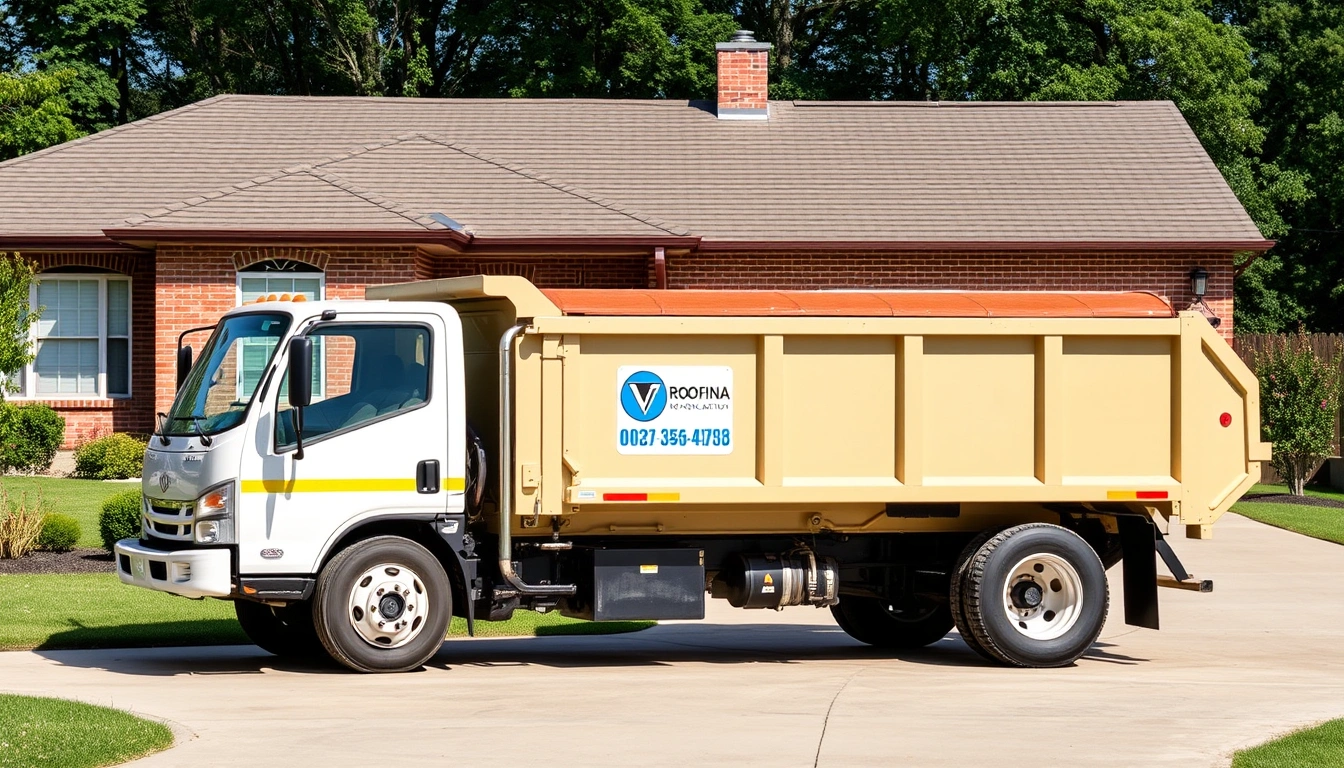
For driveway placement, the 10-yard roll-off dumpster footprint is approximately 14 feet long by 7.5 feet wide. Measure your driveway width before booking. A driveway narrower than 10 feet needs a different plan — street placement or a repositioned yard drop — because a driver cannot safely maneuver a container into a tight space without risking driveway edge damage on the approach alone.
That 14-foot length also defines the minimum clear run-up your driveway needs. The delivery truck itself runs 28–32 feet long and must back in fully before the hydraulic arm engages. Add the 14-foot container to the truck length, and you need close to 60 feet of clear linear space from the front of the dumpster back to the street. Account for this before the truck shows up — not while the driver is idling at the curb.
The tear-off catch zone: the measurement most roofers skip
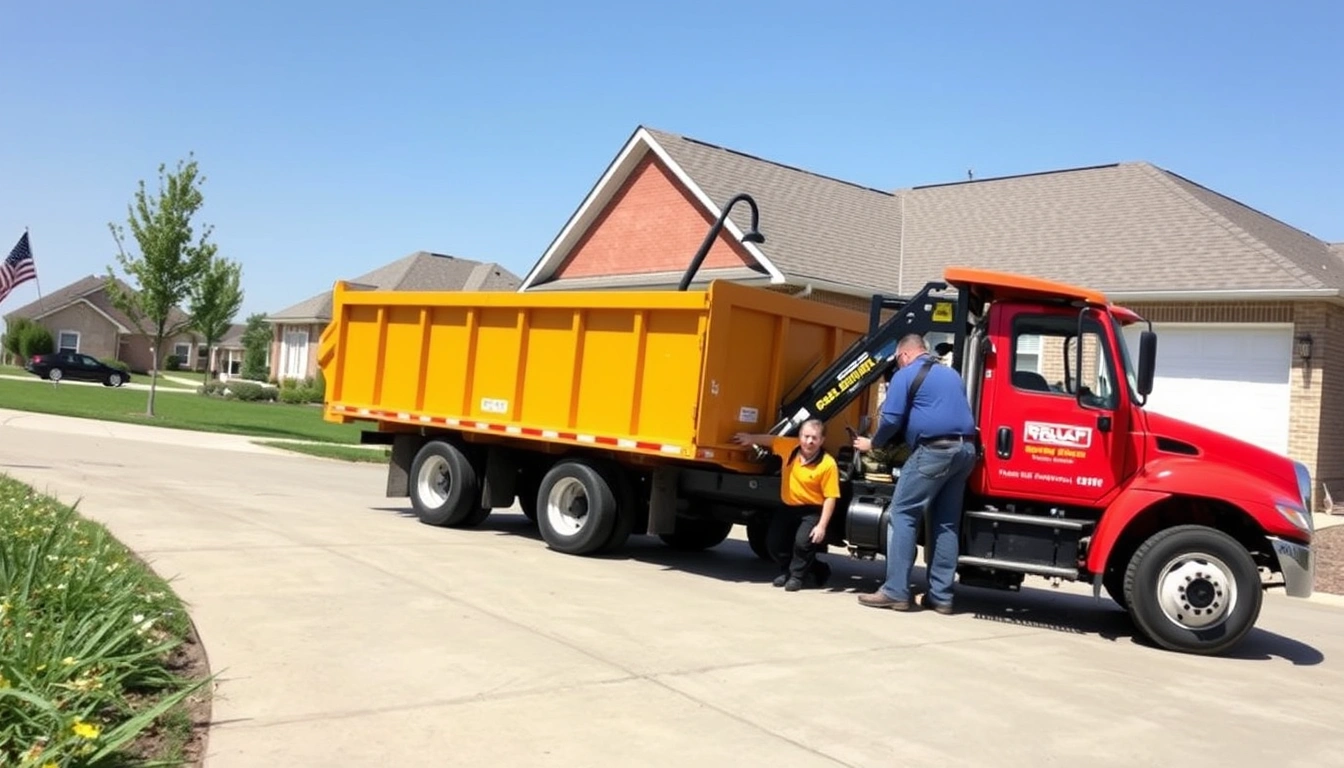
The tear-off catch zone is the rectangular ground area where shingles naturally land during removal, defined by roof pitch, eave height, and how the crew tosses debris. Mapping this zone before dumpster placement is what separates a two-hour cleanup from a five-minute one — and it is the specific step that almost no roofing contractor in Muskogee, or anywhere else, thinks to diagram in advance.
For a standard 6/12-pitch roof on a one-story Muskogee ranch home — with an eave height around 10–12 feet — shingles tossed by a crew member land roughly 5–10 feet from the wall. On a steeper 8/12 pitch, that range extends to 8–14 feet. The open end of the dumpster should sit at the near edge of that zone; the far closed wall should reach toward the far edge. On a two-story home, shingles can travel 15 feet or more from the wall, which sometimes requires pulling the open end of the container further from the foundation even at the cost of crew walking distance.
For accurate context on muskogee roofing debris statistics dumpster volumes by home size and shingle layer count, that data breaks down how much material different Muskogee roof configurations actually produce — useful for confirming whether a 10-yard or 15-yard container fits the job.
On a 6/12-pitch roof at standard ranch height, a dumpster positioned with its open end 2 feet from the wall captures roughly 80–90 percent of crew-tossed shingle debris without any additional tarps or catch nets.
For low-slope roofs — anything below 3/12 pitch — shingles don’t travel; crews typically hand-carry bundles or use a forklift if staging from the ground. The catch zone concept matters most for roofs at 4/12 and steeper, where gravity does the work and trajectory becomes unpredictable.
How do I keep shingles from missing the dumpster during tear-off?
Shingles miss the dumpster for three distinct reasons, and each has a different fix. The first is wrong container position relative to the eave — the catch zone issue described above. The second is a crew throwing shingles at the wrong angle or too hard, overshooting the far wall. The third is a steep roof where shingles slide rather than get thrown, gaining enough momentum to clear the container entirely.
For positioning errors, use the catch zone method: open end facing the roof, placed under the active tear-off section, shifted along the driveway as work progresses to different roof faces. A container parked in one fixed spot while the crew works from front pitch to back pitch will miss the catch zone on one side for half the job.
For overshoot on steep roofs (8/12 pitch or steeper), ask your contractor about a debris chute — a flexible polyethylene tube that runs from the roof surface directly into the dumpster opening. Chutes reduce scatter dramatically, speed up cleanup, and protect landscaping and AC units that would otherwise take direct hits from sliding shingles. Knowing what size dumpster for roof tear off Muskogee jobs typically require also matters here — a container that’s already three-quarters full doesn’t catch debris the same way an empty one does; incoming shingles bounce off the pile rather than landing cleanly.
Plywood driveway protection: why thickness matters more than coverage area
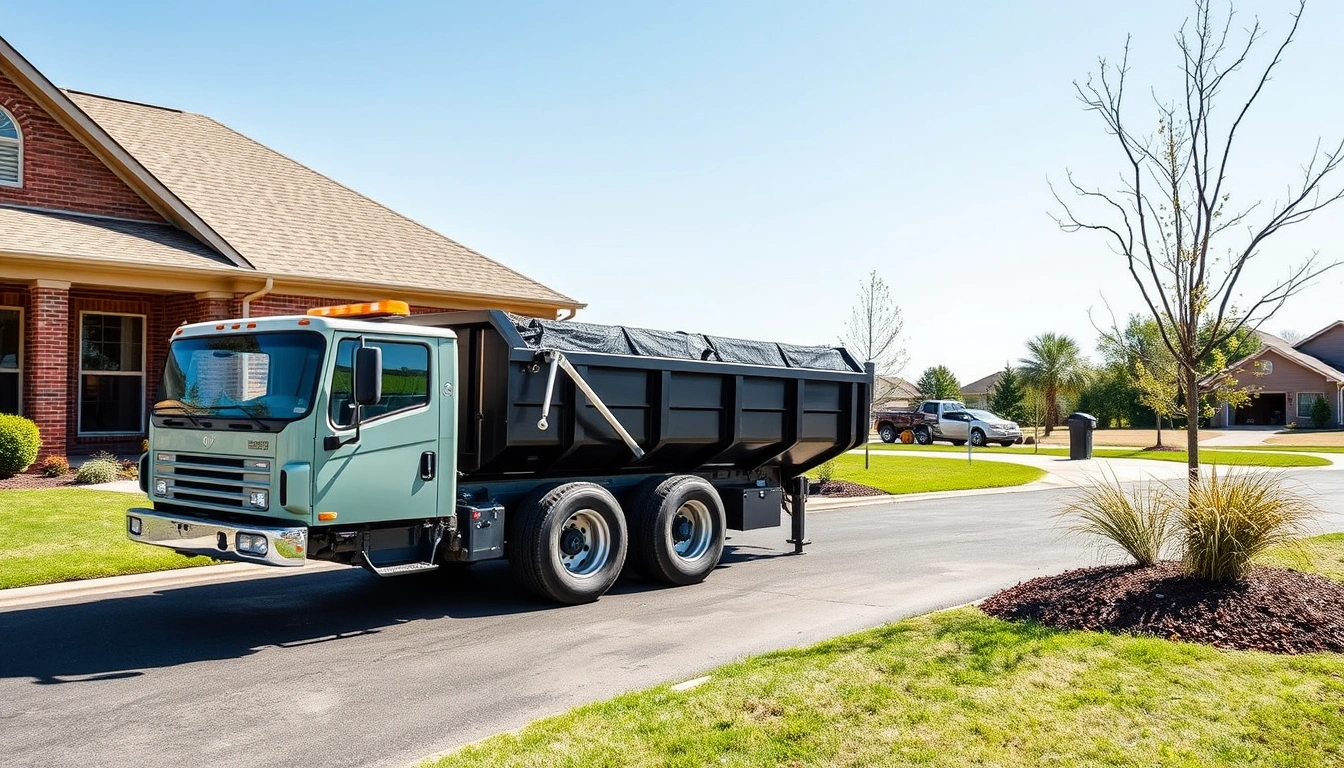
Two layers of ¾-inch plywood under each dumpster skid rail is the right target for concrete driveways — not one layer, not plywood across the entire dumpster footprint. The load transfer on a roll-off container happens almost entirely through the two skid rails, not the full bottom surface. Covering the space between the skids doesn’t distribute weight; covering the skids themselves does.
A single ¾-inch board under each skid reduces the effective point load from roughly 300–400 lbs per square foot down to approximately 50–80 lbs per square foot by spreading the load across the board’s surface area. Two layers reduce it further and, critically, prevent the boards themselves from cracking under dynamic loading as shingle weight builds through a multi-day job. Standard residential concrete is typically poured to 3,000–4,000 psi compressive strength — per American Concrete Institute specifications, adequate for vehicle loads, but not engineered for the sustained static and dynamic point loads of a loaded roll-off container.
One detail most articles skip: make sure the boards are not bridging existing expansion joints or control cracks in your driveway. A board spanning a joint flexes under load and concentrates force at the joint edges instead of distributing it — the opposite of the intended effect. Offset the boards so each one sits flat on intact, uninterrupted slab. If a major joint runs through the placement zone, position each board to one side of it rather than across it.
For an asphalt driveway in cooler months — October through April in Muskogee — single-layer ¾-inch plywood often holds adequately. In summer, the asphalt surface softens enough that even a distributed load causes deformation. Two layers are worth the extra $40 investment in all warm-weather jobs. The roofing dumpster rental Muskogee OK process can include placement guidance on request — useful for homeowners who aren’t sure about their specific driveway’s condition before booking.
Street vs. driveway placement in Muskogee — when each makes sense
Driveway placement is the right call for most Muskogee roofing jobs because it gives the most control over catch zone position and avoids the permit process. Street placement is correct in three specific situations: the driveway is narrower than 10 feet, the driveway already has significant cracking that makes additional load inadvisable, or the job runs more than four days and blocking the driveway for that duration creates logistical problems for the household.
| Placement option | Best for | Key requirement | Risk level |
|---|---|---|---|
| Driveway with plywood | Most jobs; drives 10 ft wide or more | Two layers of ¾-in. plywood under each skid | Low |
| Driveway without plywood | Never — not on concrete or asphalt | N/A | High — cracking very likely |
| Public street | Narrow drives; long-duration jobs; pre-cracked slabs | City of Muskogee right-of-way permit | Medium — permit and traffic considerations |
| Grass or yard | Rural or corner lots with drive access | Firm, dry ground — avoid after rain | Medium — sinking risk on saturated clay |
Street placement in Muskogee requires a temporary right-of-way permit through the City of Muskogee Public Works department. Plan for 1–2 business days to process — street placement is not a same-day decision. If the job is already scheduled and you discover the driveway won’t work the night before, call the rental company first thing in the morning about street-side options, not at noon.
One underused option in Muskogee neighborhoods: a 45-degree driveway angle, where the rear of the container rests in the driveway and the open end angles toward the front yard grass. This works well on corner lots and some wide front yards, reduces permit requirements, and keeps the catch zone functional. The downside is ground compaction and some turf damage — recoverable, and far cheaper than concrete repair.
What Muskogee summers do to asphalt driveways under a loaded container
Muskogee averages July highs near 95°F, and black asphalt surfaces in direct sun commonly reach 140–160°F. Above 120°F, residential asphalt becomes pliable enough that sustained weight — even distributed weight — leaves permanent deformation, not just cracking. The ruts and impressions that result collect water in freeze-thaw cycles and accelerate surface deterioration over subsequent winters.
Eastern Oklahoma’s soils compound this. Muskogee sits on predominantly expansive clay that swells when wet and contracts when dry. A dumpster placed in late spring — when soils are still saturated from the March through May storm season — sits on a base that’s already at or near its load limit. Add the weight of a full shingle tear-off and the combination of softened asphalt, wet clay, and concentrated point loading is exactly what causes visible cracking that the homeowner didn’t have before the job started.
Timing matters for driveway protection, not just container placement. The best scheduling window for Muskogee roofing jobs — from a driveway-protection standpoint — is September through November, after peak heat and before winter freeze-thaw cycles begin. Spring scheduling is viable if the job runs after the wet season but before June temperatures hit. For tracking how many rental days the job will actually need, roofing dumpster rental days needed Muskogee guides break that down by roof size and crew size.
What roofing contractors in Muskogee get wrong about dumpster setup
The most common mistake is not skipping the plywood — it is ordering the container for the morning the crew starts instead of the afternoon before. A dumpster that arrives the same morning forces three things to happen in the wrong order: driver places the container where it’s fastest to back in, plywood goes down in a rush or not at all, and the catch zone gets no thought because tear-off has already started. Order the dumpster for delivery the afternoon before, so placement is done deliberately with nobody waiting on you.
Second most common mistake: treating the dumpster position as fixed for the entire job. On a full roof replacement, the best approach is two placements — start with the container under the front-facing roof section, then reposition to cover the back or side pitch once the first section is complete. This keeps the open end consistently below the active tear-off zone rather than requiring crew to carry shingles across the roof to one fixed drop point. It also reduces foot traffic and weight load on a single section of the driveway.
Third, and often the one that derails the whole plan: failing to check overhead clearance. A roll-off truck’s hydraulic arm extends to approximately 23 feet during placement. Mature pecan trees, live oaks, and catalpas are common in Muskogee front yards — and many of them hang over driveways at exactly the height that blocks the arm. The driver will not place under low branches, and a repositioned container away from the trees may put it completely outside the catch zone. Walk the driveway, look up, and resolve any branch conflicts before the truck is scheduled.
Local costs and logistics in Muskogee, OK (2026)
A 10-yard roll-off dumpster for a roofing job in Muskogee and surrounding areas — including Wagoner, Fort Gibson, Checotah, and Tahlequah — typically runs $300–$500 for a standard 3-to-5-day rental. The number that surprises most homeowners isn’t the base rate; it is the weight overage charge that kicks in when asphalt shingles push the load past the container’s standard weight allowance.
Asphalt shingles weigh roughly 250–400 lbs per roofing square. A single-layer tear-off on a 2,000 sq ft home generates 4–6 tons of shingle debris alone, and most standard 10-yard rental agreements include a weight allowance of 1–2 tons before overage fees apply. Ask about the included weight limit — and what the per-ton overage rate is — before you book, not when the bill arrives. Per-ton overage rates in this market commonly run $50–$100.
| Cost item | Typical Muskogee range (2026) | Notes |
|---|---|---|
| 10-yard dumpster rental, 3–5 days | $300–$500 | Standard roofing job duration |
| Weight overage, per ton over limit | $50–$100/ton | Common on full tear-offs; ask in advance |
| City right-of-way permit, street placement | $25–$75 commonly | City of Muskogee Public Works; 1–2 business days |
| Plywood protection boards (4 sheets, ¾-in.) | $80–$160 | Available at local lumber yards in Muskogee |
| Concrete driveway crack repair (if protection skipped) | $400–$1,800+ | Varies by crack depth, length, and slab age |
The math on plywood is not subtle: four sheets of ¾-inch plywood run $80–$160 at lumber yards in the Muskogee area and protect against crack repairs that commonly run five to ten times that cost. Even if the driveway survives the first job unprotected, the cumulative stress on aging concrete compounds. The second job without boards is typically what produces the visible fracture the first job started.
Per the American Concrete Institute, standard residential flatwork concrete has a design lifespan that assumes distributed, dynamic vehicle loads — not the sustained, concentrated static loads of a loaded roll-off container. Plywood protection boards are the cheapest engineering fix between those two load types.
- Position the dumpster’s open end within 2–3 feet of the eave, perpendicular to the house wall — not parallel with the opening facing the street, which is the default driver placement and the wrong one for shingle catch.
- Two layers of ¾-inch plywood under each skid rail is the minimum for concrete driveways; single-layer is not adequate during Muskogee summer heat when asphalt softens above 120°F surface temperature.
- Map the tear-off catch zone before placing the container — a 6/12-pitch roof at standard one-story height lands shingles 5–10 feet from the wall, and the dumpster’s open end should cover that zone.
- Order the dumpster for the afternoon before the crew starts, not the morning of — rushed same-day placement almost always defaults to driver convenience over catch zone position.
Common questions about roofing contractor dumpster placement driveway Muskogee
What is the best dumpster placement for a roofing tear-off?
Position the open end of the dumpster within 2–3 feet of the roof’s drip edge, directly below the active tear-off section, oriented perpendicular to the house wall. This covers the natural shingle-fall zone — roughly 5–10 feet from the wall on a 6/12-pitch roof — and lets the crew throw straight down rather than sideways. Shift the container as work moves to different roof faces.
How to protect a driveway under a roll-off dumpster step by step?
Mark where the dumpster skid rails will land. Lay one 4×8 sheet of ¾-inch plywood under each skid location. For concrete driveways, add a second ¾-inch layer on top. Confirm boards sit flat — not bridging expansion joints or existing cracks — then call the truck in. Total setup time: under 15 minutes, cost around $80–$160 in materials.
Driveway vs. street placement for a roofing dumpster — which is better?
Driveway placement is better for most Muskogee roofing jobs — it gives full control over catch zone position and skips the City of Muskogee right-of-way permit. Street placement makes sense when the driveway is narrower than 10 feet, already damaged, or when the job exceeds four days and household access matters. Plan 1–2 business days for the permit if choosing the street.
Why is my driveway cracking under the dumpster and how do I prevent it?
Cracking happens because a loaded dumpster’s weight concentrates through two narrow skid rails, generating point loads of 300–400 lbs per square foot — more than aging residential concrete is designed to handle. Prevention: two layers of ¾-inch plywood under each skid, placed on solid slab (not bridging joints or cracks), reducing effective load to roughly 40–60 lbs per square foot.
How much clearance does a roll-off delivery truck need in Muskogee in 2026?
A roll-off delivery truck needs at least 60 feet of clear linear space from the drop point back to the street, and 23 feet of vertical overhead clearance for the hydraulic arm during placement. In Muskogee neighborhoods with mature pecan, oak, or catalpa trees overhanging driveways, measure overhead clearance before booking — drivers can legally refuse any placement that risks the equipment.
Can I get same-day dumpster delivery for a roofing job in Muskogee?
Same-day delivery is possible in Muskogee for calls placed before 9 a.m., depending on availability. The problem is not delivery speed — it is that same-day orders leave no time to lay protection boards or plan the catch zone before the crew starts. Order the afternoon before, so placement decisions happen without a crew waiting on you.
What size dumpster do I need for a full roof replacement in Muskogee?
A 10-yard roll-off dumpster handles most single-layer tear-offs on homes up to 1,500 sq ft. Two-layer tear-offs, roofs over 2,000 sq ft, or jobs that include wood decking removal typically need a 15-yard container. When in doubt, size up — a mid-job swap adds cost and downtime, and a container that fills before the crew finishes slows every subsequent step.
The bottom line
Every cracked Muskogee driveway that results from a roofing job traces back to the same two skipped steps: no catch zone planning, and no plywood under the skids. Neither one requires the roofing contractor to do anything differently — they are homeowner decisions made the afternoon before the truck arrives. Roofing contractor dumpster placement driveway Muskogee prep is not complicated; it just has to happen before the job starts, not after the damage shows up.
The one thing to do today: buy four sheets of ¾-inch plywood and set them at the intended placement spot. That is $80–$160 and under 20 minutes of effort. If you are still working through the weight limits, timing, and container sizing for your specific roof, the full guide to Roofing & Shingle Tear-Off Dumpster Rental in Muskogee, OK — Weight, Sizes & Cost by Roof Type covers all of it in detail, including what a two-layer tear-off actually weighs and when a single 10-yard container will not be enough.
See also: roofing dumpster rental muskogee ok
See also: muskogee roofing debris statistics dumpster
See also: what size dumpster for roof tear off muskogee
Related: roofing dumpster rental cost muskogee
Related: storm damage roof debris dumpster muskogee
Related: commercial roofing dumpster tpo membrane muskogee

Leave a Reply