
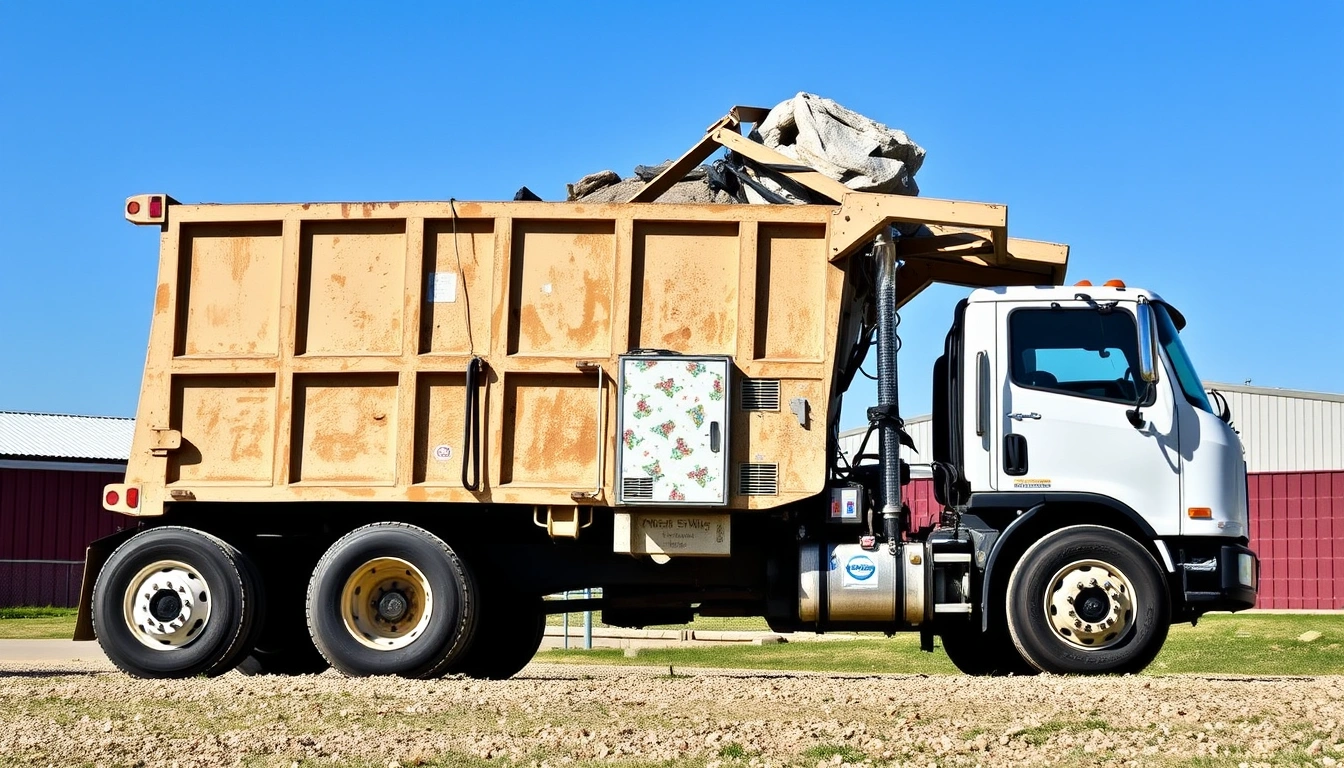
“`html
Estate cleanout dumpster rental Muskogee OK: the size guide that actually maps to your house
⏱️ 15 min read · Last updated: 2026
- A 20-yard roll-off dumpster holds roughly 10 full pickup truck loads of material — the right fit for most 3-bedroom estate cleanouts under 1,800 sq ft in Muskogee, OK.
- Room-by-room debris averages: bedroom = 1–3 cubic yards; kitchen = 2–4 cubic yards; garage = 4–8 cubic yards; basement = 5–12 cubic yards depending on contents.
- Hoarder cleanouts typically generate 1.5–2x the debris volume of a standard home the same size — a 1,500 sq ft hoarder home in Muskogee commonly needs a 30-yard roll-off dumpster.
- Oklahoma prohibited disposal items include liquid paint, propane tanks, car tires, and refrigerant-containing appliances without a certified freon-removal tag.
- Mattress disposal at Oklahoma facilities typically carries a surcharge of $15–$25 per unit; refrigerant appliances such as refrigerators and window AC units commonly require an additional $20–$50 certified disposal fee.
Forty cubic yards of accumulated life — that’s what a typical three-bedroom Muskogee home holds when a family finally starts sorting through an estate. Most people planning estate cleanout dumpster rental in Muskogee, OK order a 20-yard roll-off based on a rough guess and discover on day three that they needed a 30. The second delivery fee hits just as hard as the first, and the closing deadline doesn’t move.
I’ve walked through dozens of estate cleanouts. The families who get the dumpster size right don’t guess — they do a room count and run the cubic yard math before they call anyone. That difference between a right-sized container and a wrong-sized one isn’t just money; it’s the difference between finishing in four days and nine.
There’s also a local dimension that generic national advice skips entirely. Oklahoma’s prohibited items rules apply to every roll-off in Muskogee, OK, and tossing the wrong things into a dumpster doesn’t just create a hassle — it can result in a rejected load fee or a fine. This guide maps house size to dumpster size with actual numbers, covers Muskogee County landfill rules you need to know before loading day, and walks through a step-by-step workflow you can start today.
What size dumpster do I need to clean out an entire estate house in Muskogee?
For a standard 3-bedroom, 1,200–1,800 sq ft home in Muskogee, OK, a 20-yard roll-off dumpster is the right call in most cases. If the home is larger than 2,000 square feet, includes a full garage, has a basement with decades of storage, or involves a hoarder cleanout, move up to a 30-yard roll-off dumpster — that extra 10 cubic yards buys a meaningful margin of error.
The most common mistake is ordering by bedroom count alone. A three-bedroom house sounds simple until you account for a garage stacked floor to ceiling with tools, a spare bedroom that doubled as storage for 20 years, or an outdoor workshop nobody touched since 2008. Those spaces add 4–8 cubic yards of whole house debris on their own.
| House size | Typical debris volume | Recommended dumpster | When to size up |
|---|---|---|---|
| Under 1,000 sq ft (1–2 BR) | 6–12 cubic yards | 10–15 yard roll-off | Storage shed or detached garage also being cleared |
| 1,000–1,800 sq ft (3 BR) | 12–22 cubic yards | 20-yard roll-off dumpster | Full garage included or home was heavily furnished |
| 1,800–2,500 sq ft (3–4 BR) | 20–30 cubic yards | 20–30 yard roll-off dumpster | Basement present, workshop, or outbuildings |
| 2,500+ sq ft or hoarder home | 28–50+ cubic yards | 30-yard roll-off dumpster (may need 2 loads) | Any home where paths through rooms are narrow |
A 20-yard roll-off dumpster holds approximately 10 full pickup truck loads of debris — enough for a standard 3-bedroom Muskogee estate cleanout, but not enough for the same house if it includes a full two-car garage.
If you’re on the fence between a 20-yard and a 30-yard roll-off dumpster, the math almost always tilts toward the 30. The cost difference is typically modest. Before booking, it’s worth understanding what affects the total bill — including weight limits and debris type — by reviewing dumpster rental cost Muskogee OK so there are no surprises on the final invoice.
Quick check: Count the rooms being fully cleared — not just tidied. Multiply each bedroom by 2, each living space by 3, each garage or basement by 6. If that total exceeds 20, start with a 30-yard roll-off dumpster.
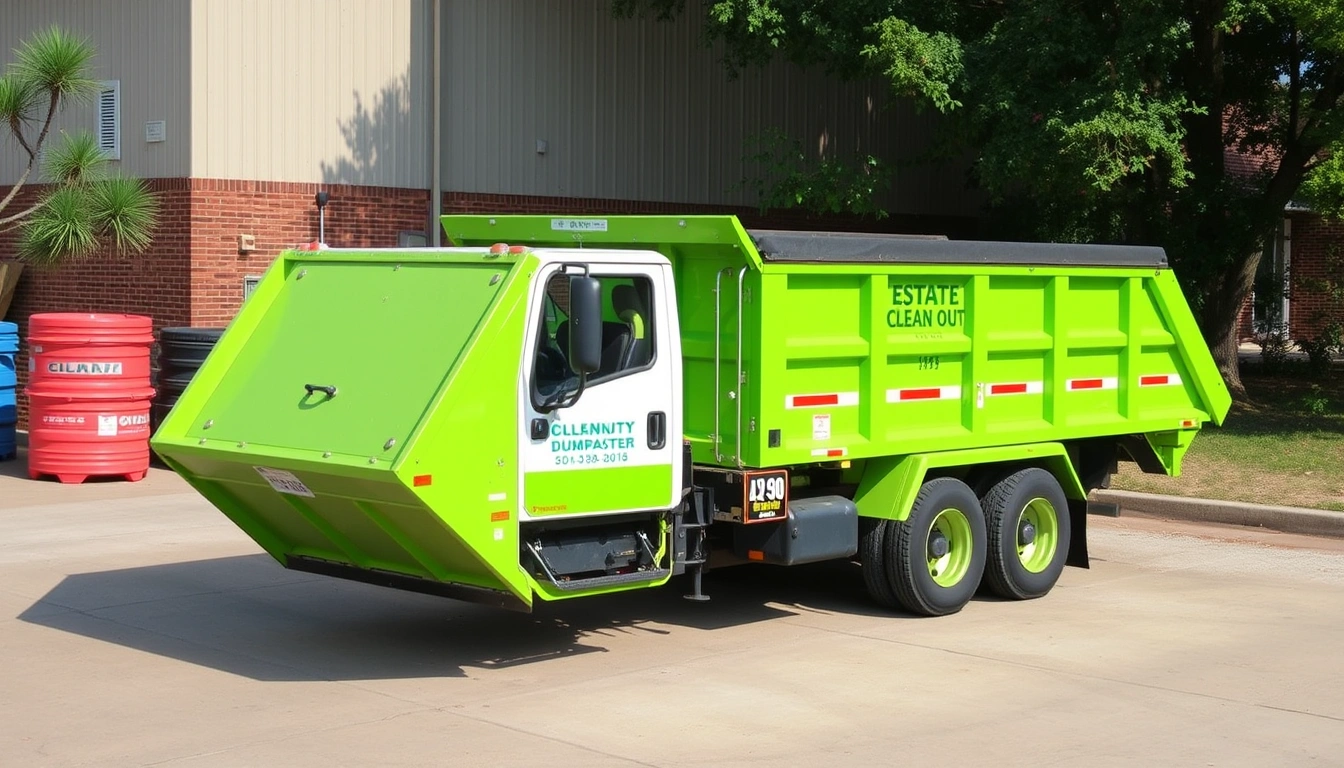
The room-by-room volume math that most national sites skip
National dumpster rental pages give you a chart that matches bedroom count to container size. What they skip is the math underneath — and the math is where the surprises live. Every room has a different debris density, and the outliers (garage, basement, workshop) can easily double a family’s original estimate.
Per-room cubic yard estimates
These are working estimates based on typical household contents, not architectural square footage. A lightly furnished room and a room that hasn’t been touched in two decades will land at opposite ends of each range.
- Bedroom (average furnishings): 1–3 cubic yards. A fully furnished room with a bed, dresser, nightstands, and closet contents lands around 2–3. A sparse bedroom or one that’s already been partially emptied runs 1–1.5.
- Kitchen: 2–4 cubic yards. Cabinets full of decades-old small appliances, cookware, and pantry goods push this toward 4. A modern, lightly stocked kitchen is closer to 2.
- Living room or family room: 2–4 cubic yards. Upholstered furniture — sofas, loveseats, recliners — is bulky relative to its weight. A single sectional sofa takes up close to 2 cubic yards on its own.
- Bathroom: 0.5–1.5 cubic yards. Unless fixtures are being removed, bathrooms are mostly small items — medicine cabinet contents, towels, small furniture. Fast to clear, low volume.
- Garage (standard 2-car): 4–8 cubic yards. This is where estimates most often go wrong. A garage housing tools, lawn equipment, seasonal storage, and household overflow runs closer to 8. An organized, lightly stocked garage runs 4.
- Basement or storm cellar: 5–12 cubic yards. Basements in Muskogee-area homes often serve as long-term storage for items moved there and forgotten. A basement untouched for a decade can easily yield 10–12 cubic yards of whole house debris.
- Shed or outbuilding: 2–6 cubic yards. Garden tools and a few boxes run 2. A workshop stuffed with power tools, lumber scraps, and old furniture runs 5–6.
Run the actual math before you book. A typical 3-bedroom, 1,400 sq ft Muskogee home — three bedrooms (6 cy total), one living room (3 cy), one kitchen (3 cy), two bathrooms (2 cy), one full garage (6 cy) — totals roughly 20 cubic yards. That’s precisely at the limit of a 20-yard roll-off dumpster, with no buffer. Add a basement, a densely packed garage, or a secondary storage space and you’ve crossed into 30-yard territory.
Quick check: If your room-by-room total lands within 2 cubic yards of a dumpster’s rated capacity, size up. The cost difference between a 20-yard and a 30-yard roll-off is consistently lower than a second delivery fee.
How do I plan a full home cleanout with a dumpster in Muskogee, OK?
A full home cleanout with a dumpster in Muskogee, OK takes 3–7 days for most families, depending on house size, crew size, and how much pre-sorting happens before disposal. The sequence below is what actually works — not because it’s obvious, but because doing steps out of order reliably adds days to the timeline and dollars to the cost.
- Day 1 — Walk the property and mark everything before moving anything. Go through every room with colored tape or sticky notes. Mark items keep, donate, or toss. Don’t move anything yet. This single step prevents the most expensive cleanout mistake: moving items twice because the decision wasn’t made before the action.
- Day 2 — Book the dumpster and confirm the drop location. Schedule your dumpster rental Muskogee OK for Day 3 delivery. Confirm the placement spot — typically the driveway. Check whether the surface can support a roll-off truck (packed gravel and concrete are fine; soft soil may need plywood boards underneath to prevent ground damage). Most Muskogee, OK providers need 24–48 hours advance notice.
- Day 2 afternoon — Run the donation load before the dumpster arrives. Load donation items — furniture in good condition, clothing, housewares — and drive them to Goodwill, the Salvation Army, or a local charity in the Muskogee area. Every cubic yard you donate is a cubic yard that doesn’t go in the roll-off. Donating first shrinks your required dumpster size and may reduce your overall cost.
- Day 3 — Dumpster arrives; load large items first. Put furniture, appliances, and mattresses in before anything else. Most families sort small items first and save the bulky pieces for last, but loading order matters — large flat items form the base layer that smaller debris fills around. Appliances with refrigerants need to be staged separately until they’ve been certified (see the prohibited items section below).
- Days 3–4 — Clear one room completely before starting the next. Work room to room, not item to item. Finishing one room before moving to the next lets you track your volume against the room-by-room estimate and catch early signs that you’re running over capacity.
- Days 4–5 — Handle hazardous and prohibited items separately. Set aside paint cans, propane tanks, automotive fluids, and batteries for separate disposal. These cannot go in the roll-off dumpster. Most Muskogee-area hardware stores accept latex paint for recycling once it’s dried solid, and the Oklahoma Department of Environmental Quality runs periodic household hazardous waste collection events. Check Oklahoma DEQ’s solid waste resources for current disposal options in the Muskogee area before your start date.
- Day 5–6 — Final sweep and schedule pickup. Walk every room a second time. Call for dumpster pickup — most Muskogee rental providers offer flexible pickup windows. Confirm whether the company charges daily overage fees past the rental period or works on a flat term.
The biggest time-waster in an estate cleanout isn’t physical — it’s decision fatigue. Families that pre-sort before the dumpster arrives typically finish 40% faster than those who decide item by item at the container.
If this estate cleanout is tied to a probate closing or a property sale, build in at least one buffer day. Buried documents, items requiring appraisal, and unexpected structural issues surface during cleanouts with reliable frequency. They add a day to the timeline, and a closing date doesn’t flex.
Quick check: Count backward from your hard deadline. You need Day 1 (sort) + Day 2 (donations + booking) + Days 3–5 (fill) + Day 6 (pickup) = at minimum 6 days from start to finish. Any tighter and you’re cutting close.
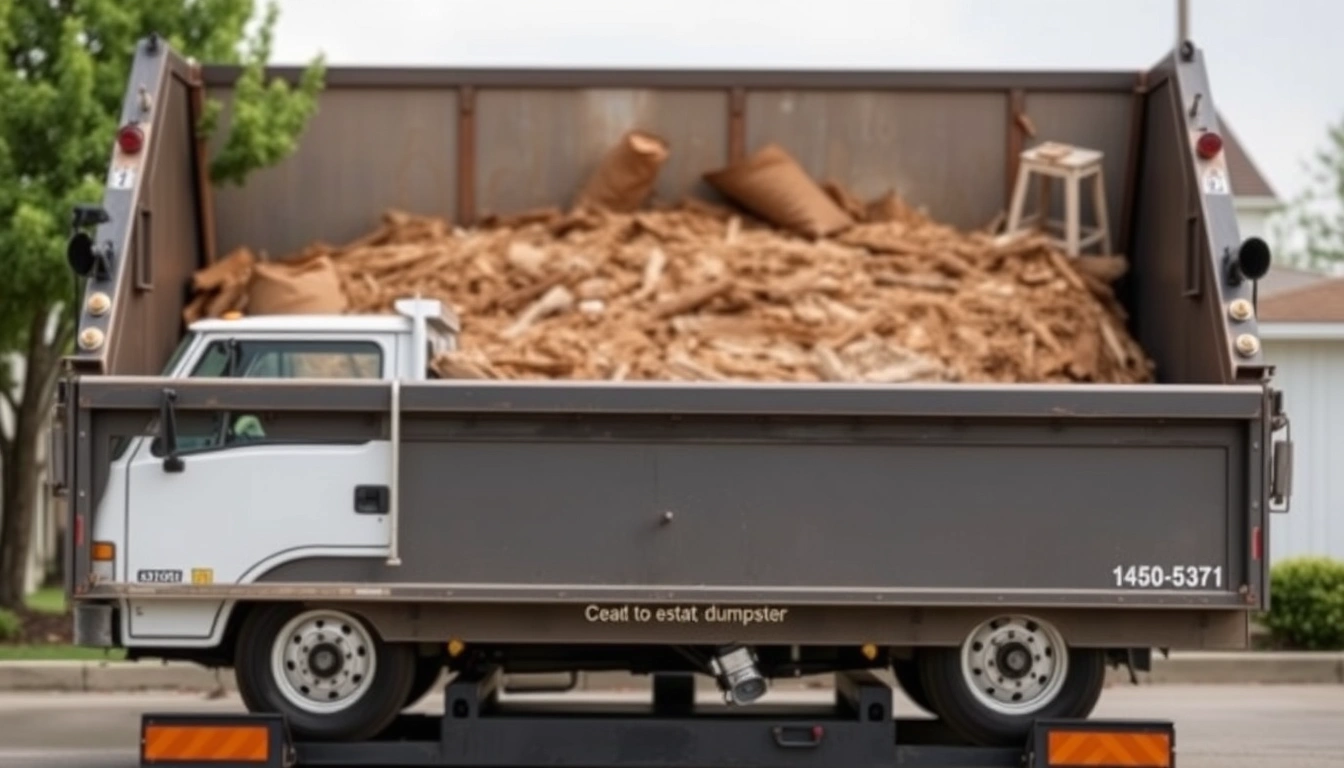
What Muskogee County landfill rules mean for your cleanout
Oklahoma prohibited disposal items apply to every roll-off dumpster in Muskogee, OK — including rental units hauled by private companies. If prohibited items are found in a load at the disposal facility, the entire load can be rejected or a contamination fee charged, and that cost gets passed directly back to you. Knowing the list before you fill is not a precaution; it’s how you avoid a $150–$300 surprise on the back end.
Prohibited items in Muskogee County roll-off dumpsters
- Liquid paint. Latex paint is prohibited in liquid form at Oklahoma solid waste facilities. Dry it out first: leave the lid off, add cat litter or commercial paint hardener, and let it solidify completely. Dried latex paint is accepted as regular solid waste. Oil-based paint is hazardous waste and must be handled separately regardless of its state.
- Propane tanks. Even visually empty propane tanks — grill-sized or larger — are prohibited in roll-off dumpsters. Many hardware stores and propane distributors in the Muskogee, OK area accept them for exchange or disposal.
- Car and truck tires. Tires are banned from standard landfill disposal across Oklahoma. Most tire retailers and auto shops accept old tires for a fee, commonly $3–$5 per tire.
- Refrigerant-containing appliances. Refrigerators, freezers, air conditioners, and dehumidifiers contain refrigerants regulated under EPA Section 608. These appliances must have refrigerant professionally recovered and documented before disposal. Per EPA household hazardous waste guidelines, improper refrigerant release is a federal violation — not a fine-print technicality. Many appliance retailers and scrap metal dealers in the Muskogee area handle this. Confirm the appliance has been tagged as “refrigerant removed” before it goes in the dumpster.
- Rechargeable batteries. Lithium-ion and lead-acid batteries are hazardous waste. Batteries from power tools, laptops, and phones must go to a battery recycling drop-off. Most electronics retailers and auto parts stores in the Muskogee area accept them at no charge.
- Household hazardous waste. Pesticides, herbicides, pool chemicals, motor oil, and automotive fluids are prohibited. The Oklahoma DEQ provides collection events and facilities for household hazardous waste — check their schedule before your cleanout start date.
- Medical waste and sharps. If the estate includes someone who used injectable medications, handle syringes and lancets as regulated medical waste. Many Muskogee-area pharmacies offer sharps disposal containers at little or no cost.
Appliance and mattress disposal fees
Even when items are accepted, many facilities and rental companies in Muskogee, OK charge extra for specific categories. Mattress disposal at Oklahoma facilities commonly runs $15–$25 per mattress. Refrigerant-certified appliances typically carry an additional $20–$50 disposal fee for the certified freon-removal documentation. These charges often don’t appear in the base rental quote — ask for them explicitly before you book.
Quick check: Before the dumpster arrives, spend 30 minutes walking the property with the prohibited items list above. Pull anything on the list and stage it in a separate area. One pre-sort pass prevents a rejected load fee that costs more than an hour of your time.
Donation vs. disposal: the decision that shrinks your dumpster bill
Donating before disposing is both a practical and financial decision. Every cubic yard that leaves the property as a donation is a cubic yard that doesn’t go into the roll-off. On a 20-yard cleanout, redirecting 3–5 cubic yards to donation can mean the difference between one dumpster load and two — a cost difference that often runs $300–$500 in Muskogee, OK.
What charities accept and what they don’t
Charitable organizations in the Muskogee area — Goodwill, Salvation Army, and local thrift stores — generally accept furniture in functional condition, clean clothing and linens, working small appliances, books, and décor in reasonable shape. What they consistently refuse: mattresses (most locations), visibly damaged or stained upholstery, large appliances, electronics older than 5–7 years, and broken or incomplete items.
| Item | Donate if | Dispose if |
|---|---|---|
| Sofas and upholstered chairs | Clean, no tears, no odor | Stained, pet odor, torn fabric |
| Mattresses | Rarely accepted by most charities | Dispose; expect $15–$25 surcharge |
| Clothing and linens | Clean, no significant damage | Heavily soiled, torn, or moldy |
| Refrigerators and freezers | Working, recent model — call ahead | Non-working; requires freon certification first |
| Books | Always — libraries also accept donations | Water-damaged or mold-affected |
| Tools and hardware | Working condition; Habitat ReStore accepts | Rusted, broken, or incomplete sets |
| Building materials | Unused or lightly used — Habitat ReStore | Damaged, moldy, or mixed scraps |
Habitat for Humanity ReStore locations accept building materials, appliances, and furniture that most standard charities won’t touch. If the estate cleanout includes building materials alongside household goods — flooring, cabinets, doors — a ReStore drop-off is worth the trip before the dumpster arrives.
Estate sale leftover removal is a different scenario
If a professional estate sale ran before the cleanout, the unsold items are what didn’t move even at rock-bottom prices. This is deceptive: the house looks emptier, but what remains tends to be the most awkward, lowest-value, highest-volume pieces buyers passed over. Charities often decline post-sale leftovers for the same reason buyers did. Budget estate sale leftover removal directly into the roll-off rather than making additional donation trips that may not pan out.
Quick check: If your donation run requires more than one vehicle trip and more than two hours, you’re at the point where it’s competing with your dumpster-fill timeline. Prioritize items charities will definitely accept — clean furniture and clothing — and put the borderline items straight into the roll-off.
When you’re dealing with a hoarder cleanout in Muskogee — the playbook changes
A hoarder cleanout in Muskogee is a categorically different project from a standard estate cleanout, and treating it the same way is the primary reason families end up paying for a second or third dumpster load. The volume calculation changes, the sorting takes longer, and the likelihood of finding prohibited items buried in the debris is significantly higher than in a standard home.
The volume multiplier
Hoarder homes typically generate 1.5–2x the debris volume of a standard home of the same square footage. A 1,500 sq ft hoarder home that would be an 18 cubic yard cleanout under normal circumstances routinely yields 28–32 cubic yards once pathways are cleared and stacked materials are broken down. Start with a 30-yard roll-off dumpster for any hoarder cleanout in Muskogee, regardless of the home’s square footage.
The reason isn’t just raw quantity — it’s density. Hoarder homes contain enormous numbers of small, loose items that don’t stack efficiently in a roll-off. Bags of clothing, boxes of unsorted papers, collections of small objects — these fill cubic yards quickly but weigh relatively little per unit of space. You’ll commonly hit the volume limit before you hit the weight limit in a hoarder cleanout, which means size matters more than weight capacity here.
Hidden prohibited items in hoarder homes
Hoarder cleanouts in Muskogee are far more likely to contain hidden prohibited items: old paint cans buried under layers of other material, forgotten automotive chemicals, stockpiled propane tanks, expired medications, and occasionally sharps. Build a specific search sweep for prohibited items into your plan before the dumpster arrives — a single pass at the end is not enough when items are layered three feet deep.
If you find signs of pest infestation, mold growth, or biological contamination on materials, set those items aside rather than loading them. Some materials under those conditions may require handling as regulated waste rather than general solid waste. This scenario is uncommon, but it’s more common in hoarder cleanouts than anywhere else.
See also: dumpster rental Muskogee OK
See also: construction dumpster rental Muskogee OK
See also: roofing dumpster rental muskogee ok
Leave a Reply